Showing posts with label German. Show all posts

BMW M5 "Hans Nowack Edition"


Nowack Motors have released an upgrade package for the BMW M5 which was dubbed as the Hans Nowack Edition to honor the retirement of the M V10 engine. The cars upgrades are mainly in the engine compartment but this modified M5 also received a couple of styling changes such as two bespoke air collectors painted to match the exterior color.

Named the N635S 5.8 Hans Nowack Edition, the 5.0L V10 pushes out 718-hp over the factory 507-hp and revs up to 9000 rpm. This engine conversion is available for all the M5s and M6s sporting the 5.0L V10, and Nowack offers a 12 month warranty with no mileage constraint for those opting to have the work done. So while BMW is pushing ahead with their twin turbo setups and abandoning the joy of torque-heavy V10s, Nowack motors continues to embrace and give current owners a new option to compete with the new technology.

Since the HNE is just an engine makeover, all current M5s / M6s can be converted into a N635S 5.8 Hans Nowack Edition. Furthermore, since every engine is brand new after conversion, the company offers a 12 month warranty without a kilometer limitation.

Source: Nowack Motors


BMW M5 Hans Nowack Edition BMW M5 Hans Nowack Edition BMW M5 Hans Nowack Edition BMW M5 Hans Nowack Edition BMW M5 Hans Nowack Edition BMW M5 Hans Nowack Edition BMW M5 Hans Nowack Edition


Press Release

A farewell celebration for the naturally aspirated V10 masterpieces of the BMW M GmbH: NOWACK MOTORS created a world unique state-of-the-art masterpiece to celebrate the end of the era of high revving naturally aspirated BMW M engines, the N635S 5.8 "Hans Nowack Edition", offering an unmatchable maximum power output of 718hp at 9.000rpm.

NOWACK MOTORS, the world's no. 1 specialist company for engineering and manufacturing unique high performance engines on basis of all BMW M engines (4-, 6-, 8- and 10-cylinder) unveils a world unique naturally aspirated masterpiece, the N635S 5.8 "Hans Nowack Edition".

The N635S 5.8 is a tribute from Oliver Nowack to his father Hans, creator of world famed race and road engines and one of the inventors of what is nowadays called ECU-Tuning. Hans Nowack was an overall technical genius who always had his own approach when engineering and building high performance engines, resulting in numerous glorious victories of his cars in international motorsports, like e.g. the victory of the European Touring Car championship with a BMW 635CSi with driver Helmut Kelleners. He never stopped to invent world-class high performance engines, and after his active career, he continued to be a mentor for his son Oliver, who followed him in his footsteps most successfully. Hans Nowack died in 2005, and Oliver created this engine to pay tribute to the lifework of his father.

It definitely is the pinnacle of all high performance engines ever built on basis of the M GmbH's 5.0ltrs. V10 offering a standard maximum power output of 507hp.

Classic mechanical tuning techniques, the usage of the latest, most advanced coating materials and techniques combined with a most sophisticated, individual remap of the ECU were always NOWACK MOTORS' no. 1 choice when increasing power and torque of naturally aspirated engines, further enhancing the thrill that only a naturally aspirated high performance engine provides. Forced induction, neither by supercharging nor turbo charging, never was an option to increase the performance of the 5.0ltrs. V10 engine as it does not suit the engine's overall technical layout and characteristics. Furthermore, a forced induction engine based on a NA engine never offers the refinement and reliability of a perfectly engineered and manufactured naturally aspirated high performance engine. Thus, it is the ultimate challenge for every high performance engine manufacturer.

Each NOWACK MOTORS N635S 5.8 ?Hans Nowack Edition" is equipped with two NOWACK MOTORS bespoke intake air collectors with a higher air volume in order to provide the engine with sufficient intake air quantity.

The colour of the paintwork for the air collectors is being determined by the exterior colour of the car.

Only this time, the name differs from all other NOWACK MOTORS creations. The name does not reveal the actual maximum power output of the engine, clearly separating this unique showcase of highly sophisticated manufacture of internal combustion engines from the N700 4.8 with 715hp, the latest high performance engine creation based on the new 4.4ltrs. BMW M Biturbo V8 engine of the new era being used in the X5M and X6M. As we all know, this engine will be used to propel the upcoming new M5 of the F10 series by next year.

All internal parts of the engine are being replaced by NOWACK MOTORS' high performance parts, thus every M5/M6 (also cars with a higher mileage), can be converted to a NOWACK MOTORS N635S 5.8 "Hans Nowack Edition".

As every engine is brand new after the conversion, NOWACK MOTORS provides an engine warranty of 12 months without kilometer limitation.

Please visit NOWACK MOTORS' website at: www.nowack-motors.com for further informations.

Audi Sound Concept features 62 speakers


Audi Sound Concept is the most advanced project of the entertainment development engineers in Ingolstadt. The project is internally dubbed the Audi Sound Concept and is being tested on a Q7 model. This design boasts an insane 62 speakers in the vehicle, consisting of five woofers, five tweeters and fifty-two mid-range speakers in the instrument panel beneath the windshield, in the roof pillars, and in the doors.

The system consists of five tweeters spread between the dashboard and the rear seating area, a woofer in each of the four doors, a single subwoofer out back, and a whopping 52 midrange speakers wrapping the perimeter of the cabin and enveloping the passengers in 360 degrees of sound. You're definitely not going to want to crank this rig up to 11.

Moreover, five units are integrated into each door sill, thanks to modifications that included cutouts in the sheet metal, new bezels and lower interior door release handles.

Development of the system took place in both the €100,000 listening facility and the €10 million audio lab at Audi HQ in Ingolstadt.


Audi Sound Concept Audi Sound Concept Audi Sound Concept Audi Sound Concept Audi Sound Concept Audi Sound Concept


Press Release

New approaches to perfect sound - Hi-fi expertise at Audi

High-end quality for listening pleasure is a field of technology that is becoming increasingly important. Audi is taking the lead in the advancement of this technology. Audi's successful collaboration with premium suppliers Bang & Olufsen and Bose is already setting standards, and the Audi development engineers have also established broad-based proprietary know-how independent of these partnerships. Their latest project takes an entirely new technical approach - and could turn out to be the next revolution in the hi-fi sector.

62 speakers: the Audi Sound Concept project

Peter Gleim's eyes light up when he cranks up the volume. The engineer works in Infotainment Development at Audi in Ingolstadt, where he heads the Audi Sound Concept project. His test subject is a Q7: Standard on the outside, interior modifications have transformed it into a rolling hi-fi studio that takes a radically new approach.

The idea behind Audi Sound Concept is a physical principle called wave field synthesis, which states that the front of any individual wave can also be considered as superposition of individual waves. In the world of acoustics this means that a sound wave can be recreated by a multiplicity of small sound sources placed closely adjacent to one another along the wave front.

The principle was first put into practice by Dutch scientists in the late 1980s, and it can be experienced today in a movie theater in Ilmenau, in the German state of Thuringia. Each of the 192 individual speakers at the Linden Lichtspiele movie theater is driven separately by a fast computer - at the precise moment in which the virtual wave front would pass through its point in space. Some signals are delayed by milliseconds, depending on the location of the speaker. The result is fascinating: Each moviegoer experiences perfect audio spatialization in optimal sound.

One of the driving forces in the field of wave field synthesis is the Fraunhofer Institute for Digital Media Technology (IDMT) in Ilmenau. Audi began its development work in collaboration with the IDMT five years ago. The current status of the project is the Q7 prototype, which is parked in a workshop. A powerful amplifier takes up most of the space in the luggage compartment, and thick cables connect it to three PCs.

Installed in the Audi Q7 are 62 speakers - five woofers and five tweeters plus 52 mid-range speakers in the instrument panel beneath the windshield, in the roof pillars and in the doors. Five units are integrated into each door sill - with Audi-typical perfect workmanship. Specialists made cutouts in the sheet metal, fabricated new bezels and lowered the interior door release handles.

"Prepare to be amazed," says Gleim, as his eyes light up and he cranks up the volume. A sound like a thunderhead issues from the speakers - an artful mix of music, traffic noise and animal sounds. A female narrator guides the listener through the acoustic hubbub, dancing past the listener on the right and at other times on the left. The whole time the listener's ears are surrounded by the sounds of driving cars and roaring lions. A marching band seems to march from side to side through the Q7 before finally a helicopter flies a lap around the cabin below the headliner.

"That is specially created wave field material," says Gleim, "comprising up to 32 tracks, with specific spatial information for each of those tracks." There are no corresponding audio media available on the market because there are no playback devices, either. A few film studios are already producing films with the method, however."

New stereo sound: the wide virtual stage

Wave field synthesis is not dependent on special material to demonstrate its strengths, however. It also coaxes entirely new acoustic images out of conventional stereo signals. As Gleim explains, "We can simulate any wave front. With stereo, we can generate a sound as if the two speakers were located far outside the car. And we can also add any desired spatial impression computationally - not as a sound effect, but as a mathematically precise simulation."

The sample for this is also very convincing. The vocals come from far off to the left, seemingly from the corner of the workshop, with the guitar coming from the other corner. This impression remains the same regardless of whether the listener is behind the wheel or on the back right seat of the Audi Q7. And sound quality is always first class - with sparkling trebles, crystal-clear midrange and dry bass. Even the slight buzz as the guitarist's fingers hit the strings makes its way to the ear with extreme precision.

"Our goal was to show what is technically feasible; to explore the limits," explains Denis Credé, Head of Sound Development at Audi. "What we are learning will be integrated into the sound systems of tomorrow. It's like with racing: A lot of what is first tried out on the race tracks of this world later shows up in modified in production vehicles. The Audi Sound Concept project is like racing for sound systems."

Wide-ranging know-how: Entertainment Development at Audi

Audi Sound Concept is the most advanced project of the entertainment development engineers in Ingolstadt. Audi has accumulated broad-based know-how in hi-fi technology in just a short time. The brand began collaborating with the upscale American supplier Bose a good twenty years ago; the collaboration with Bang & Olufsen began around the turn of the millennium.

Audi began offering the advanced sound system from the Danish sound wizards in the A8 luxury sedan in fall 2005. The 14 active speakers, including two acoustic lenses with anodized aluminum grilles, and 1,100 watts of amplifier power brought high-end sound to the automobile direct from the factory for the first time. The openly proclaimed collaboration between the two companies was another first in the European automobile industry. It proved to be a tremendous success for both sides - the advanced sound system has a penetration rate of greater than 10 percent in both models, the A8 and Q7, in which it is available.

If a new Audi model is to be equipped with a new premium or advanced sound system, the development work is performed primarily at Bose or Bang & Olufsen. The Audi engineers prepare precise requirement specifications in which the system layout - the type, number and installation location of the speakers - plus the speaker characteristics, the design of the amplifier and a target sound appropriate for the vehicle are defined.

Prototype vehicles are sent to Esslingen, Germany, and Struer, Denmark, where the partners work on the speakers, enclosures, amplifiers and acoustic algorithms. The last step is fine-tuning the sound, which is performed together with the Audi specialists in Ingolstadt. The "Sound Commission," a body comprising representatives from all units of the company, is responsible for final acceptance and approval.

How close does the high-end sound in a new Audi A8 come to the reality of the recording? "The determining factors are always the installation locations in the car and the quality of the components," explains Gleim. "When you order a car with the advanced sound system, you get the best speakers available anywhere. Many of them have membranes made of a fiberglass composite, which has a very natural and linear sound."

Pure sound is technically feasible - but not desired. "A linear frequency response in the car would be boring," says Gleim. The tight interior does not allow the sound to spread out like in a living room. Cushions and upholstery absorb it, which is why the low frequencies must be overdriven to a certain extent. The electronic fine-tuning - the tweaking of the algorithms in the sound processor - handles this.

"We deliver a certain fun factor with our compact and sporty models," explains the sound development engineer. "In the A8 and Q7, however, the sound is more subtle and natural. There is no ultimate ideal, though, because each person perceives sound in their own unique way."

Proprietary development: the Audi sound systems

Below the high-end and premium systems, Audi offers additional systems such as the Audi sound system, which also uses impressive technology to produce excellent sound quality. Because Audi alone is responsible for the design and tuning of these systems, the development engineers have developed an extensive foundation of expertise.

The Electronics Center established at the Ingolstadt plant in 2003 includes a sound laboratory, where the sound systems undergo rigorous testing during the development phase. The engineers test the speakers and amplifiers offered by the suppliers, beginning with the very first sample level and assess the quality delivered, in part by means of exhaustive listening comparisons.

The laboratory features equipment valued at nearly €10 million - from the microphones and the special amplifier test bed custom-developed to Audi specifications to the laser vibrometer. The latter uses a laser to scan the surface vibrations that occur on the speaker membrane, the speaker housing or the door in which the speaker is installed.

The color graphics produced precisely indicate if the membrane does not oscillate properly across its entire surface. "Weaknesses in a speaker are very often a simple question of design," says Gleim's colleague, Wolfram Jähn. "In many cases, the manufacturer can resolve these with minor changes, such as details of the curvature or the overlap between the paper and the rubber at the bead."

Speakers are analyzed at the Audi sound laboratory in a testing room, which is a room-in-room construction. The testing room is mounted on thick elastomer bearings and is completely decoupled from the rest of the building. An absolute necessity given its direct proximity to a roller dynamometer.

All six sides of the testing room feature large fiberglass wedges covered in silk that break up the sound. A floating wire lattice serves as the floor.

The testing room is acoustically dead - the human voice loses its richness here. The room is also often used to refine operating noises in the cabin, i.e., to fine tune clicking rotary knobs and switches. "As far as we know, none of our competitors have such a facility," says Jähn.

The listening room: resetting your ears

Whereas the testing room is used for mathematical analysis, the adjacent listening room is tailored for the subjective experience. It, too, is an acoustically optimized room-in-room construction - the special wooden double walls backed with insulation only allow the linear reflections desired. The precisely calibrated, high-end sound system installed here costs around €100,000 and its tube-based end stages are the size of small refrigerators.

"The listening room is our acoustic magnifying glass," explains Jähn, "where we check what really is on a CD or DVD. This is important because your ears quickly get used to a sound and sometimes interpret errors as interesting effects. We test our sample speakers blind. We can compare them to the optimum and reset our ears."

Thanks to these detailed tests and comparisons, the sound development engineers at Audi can define detailed specifications for the speaker suppliers.

Another element for success is the tight networking between Technical Development, Production and Quality Assurance at Audi. This enables requirements from daily production work and the real-world customer experience to flow into the development of new sound systems.

The quality of the sound systems has gotten significantly better in recent years as a result, according to Gleim. And the engineers are constantly learning - at a rapid pace, day-in, day-out. Audi will further strengthen its leadership position in the high-end sector.


Audi runs R8 e-Tron prototype at 24 Hours of Le Mans


Audi's been promoting the fact that an "e-tron" would lap Le Mans this week as part of a demonstration of alternative fuel vehicles shown at speed just before the start of the 24 Hours of Le Mans. Joining cars like the Porsche GT3 hybrid and natural gas powered Volkswagen Scirocco that both ran Nurburgring, the Audi e-tron turned out to be an outwardly normal Audi R8 painted in a matte medium grey with bright green decals. 

Its battery sits behind the passenger cabin to optimise its centre of gravity, thus achieving a 42:58 weight distribution. Four motors drive the front and rear axles and maximum power is quoted at 230 kW (308 bhp/ 313 PS), while peak torque is an astounding 4,500Nm (3,319 lb-ft). About 70 percent of power goes to the rear. Audi says the R8-based e-tron will accelerate from 0 - 100km/h in just 4.8 seconds.

A cable and plug allow the Audi R8 E-tron’s energy storage to be powered by your household current of 230 volts/16 amperes. Charging time is about 6-8 hours when the battery has been completely depleted and goes down to about 2.5 hours when high voltage is used.


Audi e-tron at Le Mans Audi e-tron at Le Mans Audi e-tron at Le Mans Audi e-tron at Le Mans Audi e-tron at Le Mans Audi e-tron at Le Mans Audi e-tron at Le Mans Audi e-tron at Le Mans Audi e-tron at Le Mans


Press Release

Audi e-tron at 24 Hours of Le Mans

  • Technology platform opens the 24-hour race
  • Five-time Le Mans winner Frank Biela at the wheel of the Audi e-tron
  • Le Mans vers le futur shows Audi concept for an electric sports car

Audi presents an Audi e-tron technology platform based on the R8 at the most important sports car race of the year. Racing legend
Frank Biela drove the purely electric powered high-performance sports car during the Le Mans vers le futur, a demonstration run for electric vehicles, giving Audi fans at the 24 Hours of Le Mans a peek at the fascinating future sporty electric cars.

Not one, but four motors - two each on the front and rear axles - power the wheels of the Audi e-tron, making the test vehicle a true quattro. With 230 kW (313 hp) and 4,500 Nm (3,319 lb-ft) of torque, the two-seater accelerates from 0 to 100 km/h (62.14 mph) in 4.8 seconds.

The test vehicle wrapped in the skin of an R8 demonstrates that the Audi e-tron belongs in the major leagues of electric sports cars. The package does justice to all of the specific realities of an electric vehicle: The battery is located directly behind the passenger cabin for an optimal center of gravity and axle load distribution.

The requirement specification for the production concept goes far beyond battery technology and the replacement of a combustion engine with an electric drive system. The interaction of all components has a decisive influence on efficiency, range and practicality. With the technology platform shown at Le Mans, Audi is providing an insight into the development work.

Design and package
The caliber of the car is apparent to the fans in Le Mans at first glance: Based on the R8, this Audi e-tron has a wide, powerful road stance. The trapeze of the single-frame grille dominates the front end and is flanked by two large air intakes.

1.90 meters (6.23 ft) wide while only 4.43 meters (14.53 ft) long and 1.25 meters (4.1 ft) tall - those are the proportions of a supercar. The wheelbase of 2.65 meters (8.69 ft) leaves ample room between the axles for people and technology. The sporty proportions offer enough room in front of the rear axle for the battery unit and the power electronics.

The special package of the Audi e-tron technology platform provides a 42:58 weight distribution between the front and rear axles and therefore ensures perfect balance and driving dynamics.

Systematic lightweight construction is a crucial prerequisite for efficiency and range - and this is also the case for electric vehicles. The Audi development engineers therefore draw on a core competence of the company for the e-tron. The body structure is based on Audi Space Frame (ASF) technology.

Driving dynamics
The normal distribution of the tractive power is clearly biased toward the rear axle. Similar to with a mid-engine sports car, roughly 70 percent of the power goes the rear and 30 percent to the front. If an axle slips, this balance can be varied by means of the four centrally controlled electric motors. The electric vehicle from Audi thus enjoys all of the advantages of quattro technology.

Via the four individual motors, which are each connected directly to the respective wheel via a short shaft, the e-tron also controls the lateral dynamics. Similar to the sport differential in conventional quattro vehicles, these motors allow torque vectoring - the targeted acceleration of individual wheels and thus an active distribution of tractive power. This boosts driving dynamics while simultaneously enhancing driving safety. Understeer and oversteer can be corrected by not only targeted activation of the brakes, but also by precise increases in power lasting just a few milliseconds. The concept car remains extremely neutral even under great lateral acceleration and hustles through corners as if on the proverbial rails.

The chassis has triangular double wishbones at the front axle and a trapezoidal-link rear suspension made of forged aluminum components - a geometry that has proven in motorsports to be the optimal prerequisite for high agility, uncompromising precision and precisely defined self-steering behavior. A taut setup was chosen for the springs and shock absorbers, but still offers a high level of comfort.

The direct rack-and-pinion steering gives finely differentiated feedback. Its electromechanical steering boost varies with speed. Fittingly, the technology platform rolls on 19-inch wheels.

Energy supply
The energy storage unit is charged with household current (230 volts/16 amperes) via a cable and a plug. The socket is behind what used to be the fuel cap. With the battery fully discharged, charging time is between six and eight hours. High-voltage (400 volts, 63 amperes) reduces this to around 2.5 hours.

The battery isn't only charged when the car is stationary, but also while driving. They keyword here is recuperation. This form of energy recovery and return to the battery is already available today in a number of Audi production models. During braking, the alternator converts the kinetic energy into electrical energy, which it then feeds into the onboard electrical system.

Interior and control concept
The interior evokes a luxury-grade racing atmosphere. As in the R8, its distinguishing characteristic is the monoposto - a large arc that sweeps around the instruments. Unlike the production R8, however, the Audi e-tron has a graphic display for indicating the driving mode located between two round-dial instruments showing the recuperation and boost level.

Similar to the new A8, the driver of this high-performance sports car can select the various driving modes using a stalk that is based on shift-by-wire technology.


1 Millionth BMW X5 sold in China


German carmaker BMW announced today it is celebrating the one millionth X5 model produced within eleven years. The vehicle in question is a sapphire black metallic BMW X5 xDrive35i featuring cinnamon brown Nevada leather trim, and is being delivered to a customer in China.

Josef Kerscher, President of BMW Manufacturing , is joined by Lutz Roemer, BMW Group’s X3 Project Leader, South Carolina State Ports Authority Boardmember Richard Hagins and South Carolina Secretary Joseph Taylor as they welcome the 1 millionth BMW X5 off the Assembly Line at BMW’s Spartanburg Factory.

One of the newest BMW X5 models today is the xDrive30d, which ispowered by a 6-cylinder diesel engine that produces 245 bhp (180 kW) and is able to cover 100 Km on 7.4 litres of fuel.


1 Millionth BMW X5 1 Millionth BMW X5


Press Release

The BMW X5: A special kind of driving pleasure a million times over.

Munich. From trendsetter to bestseller. Within just eleven years, one million BMW X5 models have been sold. The anniversary edition, a sapphire black metallic BMW X5 xDrive35i featuring cinnamon brown Nevada leather trim, came off the assembly line at the American BMW plant in Spartanburg/South Carolina and is currently on its way to a customer in China. Achieving the seven-digit production figure is a further milestone in the success story of the first Sports Activity Vehicle. When it premiered in 1999, the four-wheel driven BMW X5 was the first vehicle of its kind. Since then, the concept of combining superior dynamics on tarmac with outstanding traction on off-road terrain, has been a show-stopper worldwide, whilst also generating crucial impulses for the BMW model portfolio. With the family of BMW X models, which has meanwhile grown to comprise a total of four members, the company has recorded steadily increasing sales figures unmatched by any other manufacturer with comparable vehicles.
The BMW X5 remains the symbol and most crucial innovator for the continuing success of the Sports Activity Vehicle concept. The spacious five-door car offers up to seven seats, its intelligent four-wheel drive system BMW xDrive guarantees awesome acceleration, both on and off road. Permanent, electronically controlled four-wheel drive technology distributes motive force to the front and rear wheels variably and according to each specific situation. Furthermore, a luxurious interior ambience and a wide choice of innovative driver assistance systems contribute towards the characteristic manifestation of driving pleasure so typical of a BMW.

Moreover, numerous awards document the outstanding product quality with regard to design, driving pleasure, safety and reliability. In 2007, the BMW X5 received, inter alia, the design prize “autonis” awarded by the trade journal “auto motor und sport” for the most attractive design, as well as a Gold Award in the J.D. Power Study on customer satisfaction in North America. The American Insurance Institute for Highway Safety (IIHS) voted this Sports Activity Vehicle as the “Top Safety Pick” for outstanding crash test behaviour both in 2007 and 2008. Current proof of the vehicle’s exceptional reliability is given by the latest breakdown statistics issued by Europe’s largest automobile club ADAC, in which the BMW X5 ranks second place behind the BMW X3 in the all-terrain vehicle category.

Again in 2010, the BMW X5 is more than ever a role model and benchmark in its class in terms of driving dynamics, efficiency, variability, premium quality and safety. With a concisely modified design, a thoroughly revised engine range and additional innovative equipment features, it continues to extend its lead within the competitive environment. Its trendsetting qualities include outstanding efficiency unparalleled in this particular segment. A prime example of this is the BMW X5 xDrive30d, which is powered by a 180 kW/245 bhp straight six-cylinder diesel engine and achieves an average fuel consumption of 7.4 litres/100 km in the EU test cycle.

With its multitude of qualities the BMW X5 has become the most significant innovator within the entire competitive environment of four-wheel driven vehicles. At the same time, the premium car builder has also repeatedly assumed the cutting edge in each respective segment with the world’s first Sports Activity Coupe, the BMW X6, and with the compact BMW X1.

The development of the BMW Spartanburg plant is also closely linked with the success story of the BMW X5. The location, which has existed for 15 years now, has become the most crucial centre of expertise for BMW X models within the BMW Group’s global production network. Built in Spartanburg, the BMW X5 is now exported to more than 120 countries, with the BMW X6 also being produced there for export to the entire global market. Before the end of this year, production of the latest BMW X3 generation will commence at this location.

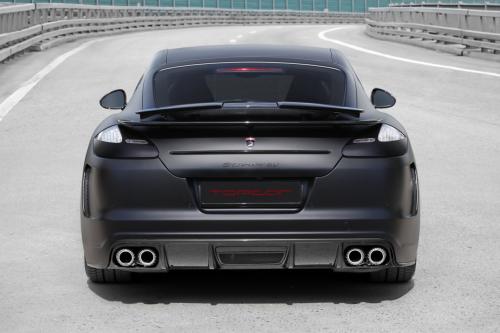
Porsche Panamera Stingray by TopCar, carbon gray color


Russian tuner TopCar has released more details regarding its Porsche Panamera Stingray. The company says three distinct versions of the powerful four-door will be made available. The first is the Black Matt Edition which comes finished in gloss black on the front lip spoiler, front bumper inserts, side skirts and rear diffuser among others.

The Porsche Panamera Stingray Carbon Gray interior is embellished with Visible carbon Fiber interior parts : the steering wheel trim and paddle, dash and center console trims, door trims etc. The matched Nappa leather interior decorated with fancy stitches and welt cords combines comfort and style with incredible practicality.

TopCar aims to bump power to between 404 kW (542 bhp / 55 0PS) and 552 kW (740 bhp / 750 PS) for all three cars.

The 2010 Porsche Panamera Stingray its new dressing mostly made of visible carbon fiber : the front lip spoiler, front bumper inserts, the bonnet, front fender scoops, side skirts, windows trims, both wings, the tailgate trim and rear bumper diffuser.

via: WCF roomcars

Porsche Panamera Stingray by TopCar, carbon gray color, Porsche Panamera Stingray by TopCar, carbon gray color, Porsche Panamera Stingray by TopCar, carbon gray color, Porsche Panamera Stingray by TopCar, carbon gray color, Porsche Panamera Stingray by TopCar, carbon gray color, Porsche Panamera Stingray by TopCar, carbon gray color, Porsche Panamera Stingray by TopCar, carbon gray color, Porsche Panamera Stingray by TopCar, carbon gray color,


Press Release

TOPCAR Porsche Panamera Stingray, which made its debut at the renowned supercars fair Top Marques Monaco 2010 in April, has been in great demand at present. To maintain the highest workmanship standards and excellent quality of the products all our car performance packages are worked out to the last detail.

Being aimed to a perfect result TOPCAR specialists help the customers in searching that unique but recognizable and inimitable appearance of their cars trying to incarnate a vision in a car and to create the most entire reflection of the personality of the car owner.

To prove the fact the Porsche Panamera appearance by TOPCAR will be available in three editions. Three distinct cars have got three distinct natures.

Black Matt Edition

The car obtains menacing appearance. Even at first glance you can't give up the idea that its matte finish and the invasive lines have adopted an uncanny resemblance to invisible fighter jet. A lower clearance and matte finish make possible to achieve the analogy.

To highlight the main shape-generating lines some elements are painted gloss black: the front lip spoiler, front bumper inserts, ventilation ‘gills' on the bonnet, front fender scoops, side skirts, window trims, both rear wings, the tailgate trim and rear bumper diffuser. Tanned rear lights and black housing headlights give the concluding chord of the strong shape. To make the inner world sing in harmony TOPCAR offers the masterly hand crafted leather interior of the ideal quality.

White Edition

The newborn Panamera has obtained astonishing lines full of grace and dignity for its new appearance. The leading principle of this car is to sing along to its wealthy and self-satisfied sole owner. The car remains distinctive at any time of day or night and in any weather conditions. To emphasize the white gloriole some car trim parts were painted black.

TOPCAR also recommends a set of specially designed and produced black multi-part rims (R21) with the white lip. The white leather interior allied to the exciting design make the ‘Panamera in White' truly unforgettable.

Carbon Grey Edition

It is a fascinating driving machine and the sporty pinnacle of the TOPCAR brand.

The car embodied some player personality traits: gorgeous looks, fearsome performance, racing success and (relative) civility on the road. The car itself painted Carbon Grey and its new dressing mostly made of Visible Carbon Fiber: the front lip spoiler, front bumper inserts, the bonnet, front fender scoops, side skirts, window trims, both rear wings, the tailgate trim and rear bumper diffuser.

The interior is embellished with Visible Carbon Fiber interior parts: the steering wheel trim and paddle, dash and center console trims, door trims etc.

The matched Nappa leather interior decorated with fancy stitches and welt cords combines comfort and style, with incredible practicality.

TOPCAR also provides a set of specially designed and produced multi-part rims (R21).

In order to achieve better performance the new Porsche Panamera engine will be juiced up and get an output from 550 to 750 hp.

These three fresh cars are aiming to deliver driving excitement, stylish and innovative design. TOPCAR's vehicles have been designed to cater for the various and varied demands of modern day drivers.

The demand for TOPCAR's products from all over the world keeps growing and it is now possible to see the renovated cars on the roads of Monaco, Germany and Switzerland.

Please have a look at the cars manufactured by our company - these can be seen on our website www.top-car.ru which shall help you appreciate the true value our kits add. Please also feel free to pay a visit to our office where you can satisfy yourself that the highest standards of workmanship are a key part of our business.

Should you have any queries or require additional information please do not hesitate to contact us - our contact information is shown below.

Internet: www.top-car.ru


BMW 3 Series Travels 1,013 Miles on One Tank of Fuel


BMW has just unveiled a new iteration of the 3-Series, and it is making quite a splash in Europe. It won’t be coming across the pond, but we sure wish that it were.

The BMW 320d EfficientDynamics Saloon develops 163 hp between 3,500 rpm to 4,200 rpm and 360 Nm of torque from 1,750 rpm to 3,000rpm. This enables the car to sprint from naught to 62mph in 8.2 seconds and reach a top speed of 137 mph (220 km/h).

UK motoring journalist Tom Ford drove a new BMW 320d EfficientDynamics sedan from the UK to Munich and back, on one tank of diesel fuel. The total distance travelled was 1,630 kilometres (1,013 miles), which means the car delivered 68.9mpg overall and CO2 emissions of only 109g/km. These are the same figures claimed by BMW.

BMW can be proud and owners of the E90 320d who must have known the car was capable of such range. Biggest reason for the good news is that the car achieved figures of 75.9 mpg UK (63.2 mpg US or 3.7lt/100km), and never went below 65 mpg UK (54.1 mpg US or 4.4 lt/100km) for the entire trip. The overall figures for Tom Ford and the BMW 320d come in at an average speed of 59.3mph (95.4km/h) and 68.9mpg UK (57.4 mpg US or 4.1 lt/100km).

It propels the BMW from zero to 62mph (100km/h) in 8.2 seconds and on to a top speed of 137mph or 220km/h while returning a combined fuel consumption of 4.1 lt/100km, equal to 57.4mpg US or 68.9 mpg UK, and a CO2 rating of 109g/km in the EU test cycle.


BMW 320d EfficientDynamics BMW 320d EfficientDynamics BMW 320d EfficientDynamics BMW 320d EfficientDynamics BMW 320d EfficientDynamics BMW 320d EfficientDynamics BMW 320d EfficientDynamics BMW 320d EfficientDynamics BMW 320d EfficientDynamics BMW 320d EfficientDynamics BMW 320d EfficientDynamics BMW 320d EfficientDynamics BMW 320d EfficientDynamics BMW 320d EfficientDynamics BMW 320d EfficientDynamics BMW 320d EfficientDynamics BMW 320d EfficientDynamics BMW 320d EfficientDynamics BMW 320d EfficientDynamics BMW 320d EfficientDynamics BMW 320d EfficientDynamics BMW 320d EfficientDynamics BMW 320d EfficientDynamics


Photos:carscoop

Press Release

BMW's most fuel-efficient and greenest-ever 3 Series completes record-breaking journey on one tank of fuel

BMW's cleanest and greenest 3 Series ever has just completed a record-breaking journey from the UK to Munich and back - on one tank of fuel.

Filled up at the Channel Tunnel, the new BMW 320d EfficientDynamics Saloon made it to Munich, then as far as Lille on the return leg - a staggering total of 1,013 miles on a single tank of fuel - before needing to be refuelled.

To put it in a UK geographic context, the distance achieved would have meant being able to drive from Land's End to John O'Groats, and still having 200 miles range left in the tank.

Just as impressive was that the intrepid driver - motoring journalist and TV presenter Tom Ford - didn't use efficient driving techniques such as coasting, or drive deliberately slowly for the trip, coverage of which appeared in yesterday's Sunday Times newspaper.

Although switching the air con and radio off as a concession to fuel saving, Tom managed a reasonable motorway pace all the way there and back, proving that in the real world, the new BMW 320d EfficientDynamics Saloon delivers what it promises on paper - an official combined figure of 68.9mpg and CO2 emissions of only 109g/km.
On the way to Munich, Tom achieved highs of 75.9mpg, and didn't dip below 65mpg for the entire trip. With an average speed of 59.3mph, the car achieved 68.9mpg overall.

He said: "I was prepared for this car to fail in the real world. I was wrong. Although I did try and be careful and drive in a feather-footed manner, I did cruise at a reasonable 65ish mph on the autoroutes and autobahns, so faster than the usual economy run pace.

"Think about it in the context of everyday motoring: comfortably more than 1,000 miles on one tank of diesel means just 12 fills a year for the average motorist - and even driven normally I still think you're looking at 750-800 miles per fill. BMW's EfficientDynamics: it does what it says on the tin."

The BMW 320d EfficientDynamics Saloon develops 163hp between 3,500rpm to 4,200rpm and 360Nm of torque from 1,750rpm to 3,000rpm. This equates to a zero to 62mph time of 8.2 seconds and a top speed of 137mph ensuring that while it might be extremely efficient, it still offers sporting performance - a fact not lost on Tom.

He said: "It's difficult to tell the difference between this model and a standard 320d in terms of driving performance which is brilliant. It means that as well as the obvious financial advantages, this special 320d is a car for the environmentally conscious who still want a car that drives superbly."

For drivers choosing the BMW 320d EfficientDynamics Saloon, there is no VED to pay for the first year of purchase due to its low CO2 figure and a 13 per cent benefit-in-kind company car tax rating and sporting ability thanks to its 163bhp. For a business buying one, the sub 110g/km emissions mean 100 per cent first year writing down allowances, allowing the model's full first year depreciation against to be offset against Corporation Tax.

The BMW 320d EfficientDynamics Saloon comes with the existing suite of BMW EfficientDynamics technologies, including Auto Start-Stop, Brake Energy Regeneration and Electric Power Steering for optimum performance. However it also achieves its class-leading emissions with the addition of innovative engine construction, a longer transmission ratio, lowered suspension and the use of specially designed aerodynamic alloy wheels with Michelin EnergySaver tyres.